
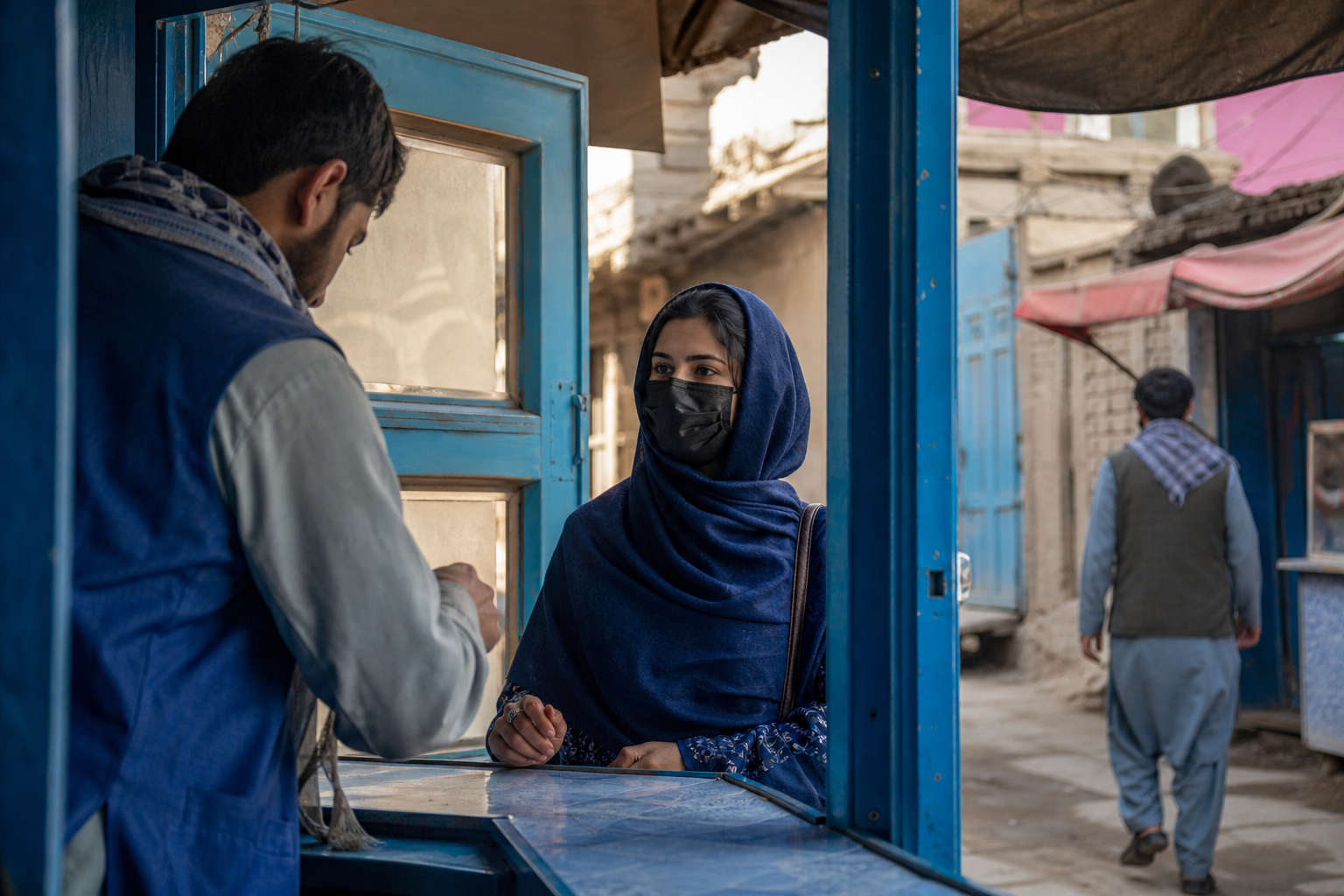
Sending money to Afghanistan is a question many people ask, especially when they want to support family, pay for essentials, or manage cross-border personal needs without running into compliance problems. The short answer is: in many cases, sending money can be legal, but it depends on who is sending it, who is receiving it, where the money is coming from, and how the transfer is processed.
Sanctions and banking restrictions can make the process look more complicated than it really is. The good news is that compliance does not always mean inconvenience. With the right platform, you can often send funds in a way that is simpler, faster, and easier to manage from your phone.
HesabPay is designed for that kind of everyday convenience: a mobile wallet experience that lets you handle transfers and top-ups directly from your phone, with multiple funding options that may include Apple Pay, Google Pay, credit and debit cards, bank accounts, cryptocurrency, and other supported methods depending on your location and account setup.
Is it legal to send money to Afghanistan?
In general, yes—sending money to Afghanistan may be legal, but it is not a one-size-fits-all answer.
The legality depends on several factors:
- Your country of residence and its sanctions rules
- The recipient’s identity and location
- The purpose of the transfer
- The payment method or financial institution used
- Whether any party involved is restricted or sanctioned
That means a transfer that is allowed for one person may be blocked for another if the sending bank, payment processor, or destination account falls under different compliance rules.
If you are unsure, the safest approach is to use a platform that clearly follows applicable compliance requirements and gives you a transparent way to complete the transfer.
Why sanctions make money transfers more complicated
Sanctions are legal restrictions that governments use for foreign policy, security, or compliance reasons. They can affect:
- Which financial institutions can process payments
- Which regions, organizations, or individuals can receive funds
- What documentation or checks may be required
- Which transfer routes are available at all
This does not automatically mean all transfers are banned. It usually means providers must screen transactions carefully and may reject transfers that do not meet their rules.
For the sender, this can show up as:
- Transfers that fail at checkout
- Banks declining international payments
- Long delays while the provider reviews the transaction
- Unclear fees or exchange rates
That is why a straightforward mobile wallet experience can be valuable: it reduces friction and helps you manage the process more easily.
Why a mobile wallet can be more convenient than traditional transfer options
Traditional money transfer services can be useful, but they may also be limited by office hours, cash pickup requirements, funding restrictions, or country-specific availability.
With HesabPay, you can do everything from your phone, which is especially useful when you want a transfer experience that feels simple and modern.
What you can do with a phone-first experience
A mobile wallet can help you:
- Add funds without visiting a branch
- Send money while traveling or living abroad
- Track your transaction in one place
- Avoid juggling multiple providers
- Complete everyday payments more conveniently
Depending on your location and account eligibility, HesabPay supports wallet top-ups in over 20 ways, including:
- Apple Pay
- Google Pay
- Credit cards
- Debit cards
- Bank accounts
- Cryptocurrency
- And other supported funding methods
That flexibility matters. If one funding method is not available to you, you may still have another practical way to top up and send money.
HesabPay vs. Western Union and MoneyGram: what’s different?
Western Union and MoneyGram are well-known names in international money transfers, and they can be helpful in many situations. But they are still built around a more traditional remittance model.
Common differences to consider
| Feature | HesabPay | Western Union / MoneyGram |
|---|---|---|
| Manage transfers from your phone | Yes | Often yes, but experience may depend on the corridor and service type |
| Top up wallet in multiple ways | Yes, with many supported options depending on location | Funding options may be more limited by region and transfer type |
| Apple Pay / Google Pay support | Available where supported | Not always available for every route or use case |
| Credit/debit card funding | Available where supported | Available in some cases, but not universal |
| Bank account funding | Available where supported | Available in some cases |
| Cryptocurrency funding | Available where supported | Not typically a standard option |
| Wallet-based everyday use | Yes | More focused on transfer-and-pickup or cash-based workflows |
The biggest practical difference is convenience. If you want a flexible, phone-based experience with multiple top-up options, HesabPay may feel easier to use than services that are more dependent on specific transfer corridors or payout methods.
Practical examples of how this helps
Example 1: Supporting family from abroad
If you live outside Afghanistan and want to send money to help with rent, food, or school expenses, a mobile wallet can save time. Instead of visiting a physical location or relying on a single funding source, you can choose the top-up method that works best for you and complete the transfer from your phone.
Example 2: Managing payments while traveling
If you are traveling and need a quick way to move funds, phone-based access is much easier than searching for a branch or carrying cash. A wallet app can help you keep control of your money on the go.
Example 3: When one payment method fails
Sometimes a card, bank transfer, or other payment method does not go through. A platform with multiple supported top-up options gives you more flexibility to try another route without starting over.
What to check before sending money
Before you send money to Afghanistan, it is wise to check the following:
1. Confirm the recipient details
Make sure the name, phone number, wallet account, or payout information is correct.
2. Understand local rules
Your obligations may depend on where you live, not just where the money is going.
3. Review fees and exchange rates
Some services advertise low fees but add costs through conversion rates.
4. Choose a provider that fits your needs
If you want flexibility and a simple mobile experience, a wallet-based service may be more practical than a cash-first transfer option.
5. Keep records
Save your transaction confirmation in case you need it later.
Why HesabPay is a strong option for Afghanistan transfers
HesabPay is built for people who want a simpler way to manage money across borders and locally, all from their phone.
A few reasons people may prefer it:
- Everything in one place on your mobile device
- Multiple top-up options for greater convenience
- Modern payment methods that fit how people already pay today
- A wallet-based experience that is easier to use for everyday needs
If you are comparing transfer options, the main question is not just whether a service can move money. It is whether it makes the process easy, flexible, and practical for real life.
FAQ
Is sending money to Afghanistan always allowed?
No. It depends on the sender’s country, the recipient, the purpose of the transfer, and the sanctions or compliance rules that apply.
Do sanctions mean I cannot send money at all?
Not necessarily. Sanctions can limit certain transactions or parties, but not every transfer is automatically prohibited.
Can I send money to Afghanistan from my phone?
Yes, if your chosen provider supports it. HesabPay is designed so you can manage transfers and top up your wallet from your phone.
What funding methods can I use with HesabPay?
Depending on your location and account eligibility, HesabPay supports wallet top-ups in over 20 ways, including Apple Pay, Google Pay, credit and debit cards, bank accounts, cryptocurrency, and more.
Is HesabPay better than Western Union or MoneyGram?
It depends on what you need. If you want a flexible, phone-first wallet experience with many top-up options, HesabPay may be more convenient. Traditional providers may still be useful in some cases, especially for cash pickup.
Should I check local laws before sending money?
Yes. It is always smart to confirm the rules that apply to you and your transfer.
A simpler way to send money
If you need a practical, mobile-first way to move money, HesabPay can help make the process feel much more manageable. Instead of working around branch schedules or limited funding options, you can top up your wallet in the way that suits you best and handle everything from your phone.
When sending money to Afghanistan, clarity matters. Convenience matters too. HesabPay is built to give you both.
Ready to get started? Explore HesabPay and see how easy it can be to top up, send, and manage money from one place.